Is Zinus Safe?
It's the most important question you can ask before buying a mattress. We answer it directly — covering CertiPUR-US® certification, VOC emissions, fiberglass transparency, Bio-Foam technology, and every independent standard Zinus meets so you can sleep with complete confidence.
The short answer: Yes — with informed use.
All Zinus foams are CertiPUR-US® certified and free from harmful heavy metals, formaldehyde, and high-VOC chemicals. Some models use a fiberglass fire barrier that is safe when the cover is not removed. Newer lines use fiberglass-free alternatives. Check your model's care label for clarity.
Independent Certifications That Matter
Unlike self-declared "non-toxic" labels, these certifications require rigorous third-party laboratory testing — not just manufacturer claims. Here is exactly what each one means for your sleep environment.
CertiPUR-US®
Every Zinus foam is independently tested and certified by CertiPUR-US®, a nonprofit program established by the foam industry to ensure consumer safety. Certification is not self-reported — it requires third-party laboratory testing on every batch.
- No ozone depleters or harmful CFCs
- No PBDE flame retardants
- No mercury, lead, or other heavy metals
- No formaldehyde
- No phthalates regulated by CPSC
- Low VOC (volatile organic compound) emissions — under 0.5 ppm
OEKO-TEX® Standard 100
Many Zinus mattress covers and fabric components are tested against the OEKO-TEX® Standard 100 — one of the world's best-known labels for textiles tested for harmful substances. This certification covers the finished product including all threads, buttons, and accessories.
- Tested for over 100 harmful substances
- Covers every component of the fabric
- Certified safe for direct and prolonged skin contact
- Verified by independent OEKO-TEX member institutes
- Renewed annually through re-testing
GREENGUARD Gold
Select Zinus models carry GREENGUARD Gold certification (formerly GREENGUARD Children & Schools), which certifies products based on stringent chemical emission standards — including criteria established specifically to protect children and other sensitive individuals.
- Stricter VOC limits than standard GREENGUARD
- Designed to protect children and sensitive users
- Tested in climate-controlled chambers mimicking real-room conditions
- Helps maintain healthy indoor air quality
What's In — and What's Not
CertiPUR-US® certification explicitly bans the following substances. Here is a transparent breakdown of what has been independently tested and confirmed absent from every Zinus foam, and what natural ingredients are intentionally present.
| Substance / Ingredient | Present in Zinus Foam | Why It Matters |
|---|---|---|
| Benzene | Not Present | Known carcinogen |
| Formaldehyde | Not Present | Respiratory irritant |
| Mercury | Not Present | Neurotoxin |
| Lead | Not Present | Developmental toxin |
| PBDE Flame Retardants | Not Present | Endocrine disruptor |
| Phthalates (CPSC-regulated) | Not Present | Hormone disruption |
| Ozone Depleters | Not Present | Environmental & respiratory harm |
| Natural Green Tea Antioxidants | Present | Neutralizes odors naturally |
| Activated Charcoal | Present | Absorbs moisture & impurities |
| Plant-Based Bio-Foam Oils | Present | Renewable petroleum replacement |
Based on CertiPUR-US® certified testing. Results apply to all Zinus foam components. Last reviewed March 2026.
Replacing Petroleum with Plants
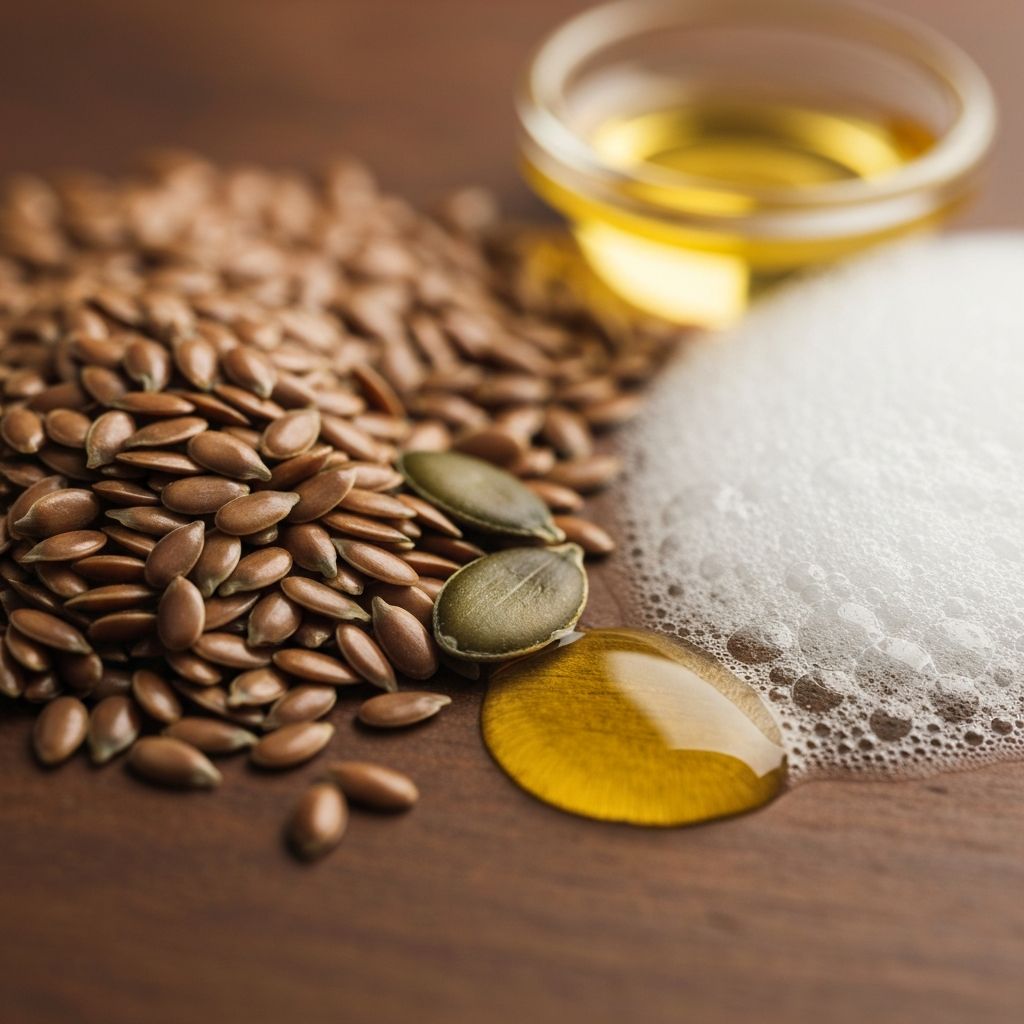
Traditional polyurethane foam is derived entirely from petroleum-based polyols. Zinus Bio-Foam technology partially substitutes these petroleum-derived oils with plant-based seed oils — primarily castor oil extracted from the castor bean plant.
This substitution reduces dependence on non-renewable resources without compromising the foam's structural performance, durability, or comfort profile. The result is a more sustainable foam that retains all the pressure-relieving qualities Zinus is known for while carrying a lower environmental footprint.
It is important to note: Bio-Foam does not mean 100% organic or natural foam. It means a meaningful percentage of the traditional petroleum polyol content has been replaced by a renewable plant-derived equivalent — a measurable and verified improvement over conventional foam manufacturing.
Renewable Source
Castor bean plant-derived oils
No Compromise
Same durability & support performance
CertiPUR-US® Tested
Independent lab-verified safety
Lower Footprint
Reduced petroleum dependency
The Fiberglass Question: Answered Directly
"Does Zinus have fiberglass?" is one of the most-searched questions about this brand. We won't bury the answer. Here it is, in full detail.
Does Zinus use fiberglass in their mattresses?
Some older Zinus models used a fiberglass fire barrier layer beneath the cover fabric — a practice once common across the budget mattress industry as a cost-effective way to meet federal flammability standards (16 CFR Part 1633). However, Zinus has been actively reformulating product lines to move away from this material. Always check the care label: if the label says "Do not remove cover," that is an indication the product may contain a fiberglass fire sock.
How do I know if my specific Zinus model has fiberglass?
The most reliable method is to check the mattress label or product listing for the phrase 'Do not remove cover.' Zinus models that use glass fiber fire barriers typically include this warning because disturbing the barrier can release micro-particles. Models marketed as 'fiberglass-free' — such as those using silica fiber or Kevlar® as the fire barrier — will not carry this warning.
What does Zinus use instead of fiberglass in newer models?
Newer and premium Zinus models use alternative fire barrier technologies including silica-based fiber barriers, natural wool fire socks, and Kevlar® woven barriers. These materials achieve the same federal flammability compliance without the shedding concerns associated with fiberglass micro-particles.
Is fiberglass dangerous if left undisturbed?
When the mattress cover remains intact and is not removed, the fire barrier layer stays fully encapsulated and poses no risk in normal use. The risk arises specifically when the cover is removed or washed, which can allow micro-fibers to escape into the room. Following the care instructions — which Zinus prints clearly on every product — eliminates this concern entirely.
Our recommendation: Before purchasing any Zinus mattress, verify the specific model's fire barrier material in the product listing. Zinus clearly lists this information in the product description on Amazon. When in doubt, choose a model explicitly listed as "fiberglass-free."
Why Green Tea and Charcoal?
One of the most common concerns with new mattresses is the "off-gassing" smell — the release of volatile organic compounds (VOCs) from newly manufactured foam. While all CertiPUR-US® certified foams meet safe VOC limits, Zinus goes further by actively neutralizing odor at the molecular level.
Green tea antioxidants — specifically polyphenol compounds — are infused directly into the foam during manufacture. These antioxidants naturally bind to and neutralize odor-causing molecules, providing a fresher-smelling mattress without artificial masking agents, sprays, or synthetic fragrance additives.
Activated charcoal microparticles work alongside the green tea infusion to absorb excess moisture and further suppress odors through adsorption — a physical process where impurities bind to the highly porous charcoal surface. Both ingredients are entirely natural, non-toxic, and derived from renewable plant-based sources.
Sleep with Confidence
Every Zinus mattress ships with full CertiPUR-US® documentation. Browse certified collections and find the right model for your sleep needs — with complete material transparency.